
Anyone who has bought a strand of bright beads online has wondered. Is it real stone? Has it been dyed? Is that "pearl" actually glass? Some of this you can check at home, and some of it nobody can tell you for certain without lab equipment. This guide covers both.
Real, treated and imitation are three different things
A real gemstone is natural stone. A treated stone is natural stone that has been changed, usually by dyeing, heating or filling it. An imitation is made of something else, such as glass or plastic, or a different stone sold under a more valuable name.
Treated stones are not fakes. Dyed agate and stabilized turquoise are common, and many jewelers use them openly. The problem starts when a seller doesn't say so.
What you can check yourself
- Price. Real gemstones cost money. A long strand of "turquoise" at a few dollars is probably not turquoise.
- Inclusions. Natural stones usually have small marks, veins or cloudy spots. A bead that is perfectly clear and flawless may be glass. A magnifier helps, but bubbles can also be added to glass on purpose, so no single sign proves anything.
- Weight and feel. Stone is usually cool to the touch and feels heavier than plastic or resin of the same size.
- Color. Look for color that pools around the drill hole or in cracks. That can point to dye. Very bright pink, royal blue or purple in stones that are not naturally those colors is often a sign of dyeing.
- Consistency. In a strand of real stone, no two beads match exactly. A string where every bead is identical in color and shape may be made of something manufactured.
Pearls
Pearls have a few extra checks. Real pearls tend to feel slightly gritty when you rub one gently against the edge of a front tooth, while glass and plastic feel smooth. Real pearls vary slightly in shape and shade, and fakes are often perfectly round and uniform. Look at the drill holes too. Chips or peeling coating around a hole can mean a painted bead.
Glass pearls aren't bad. They are lustrous, light to wear and affordable, and we use them in some pieces. We say so on the product page whenever we do.
What you can't tell at home
Telling similar stones apart, for example real turquoise from stabilized turquoise or howlite dyed blue, often takes a gemologist. Avoid tests that scratch or damage a stone. If a piece is valuable, ask for an appraisal from a certified gemologist instead of testing it yourself.
Questions to ask a seller
- What is each stone, by name?
- Has anything been dyed, heated or stabilized?
- Are the pearls freshwater, cultured or glass?
- Do you have more photos in natural light?
A good seller answers plainly. If an answer is vague, take that as information.
How we describe ours
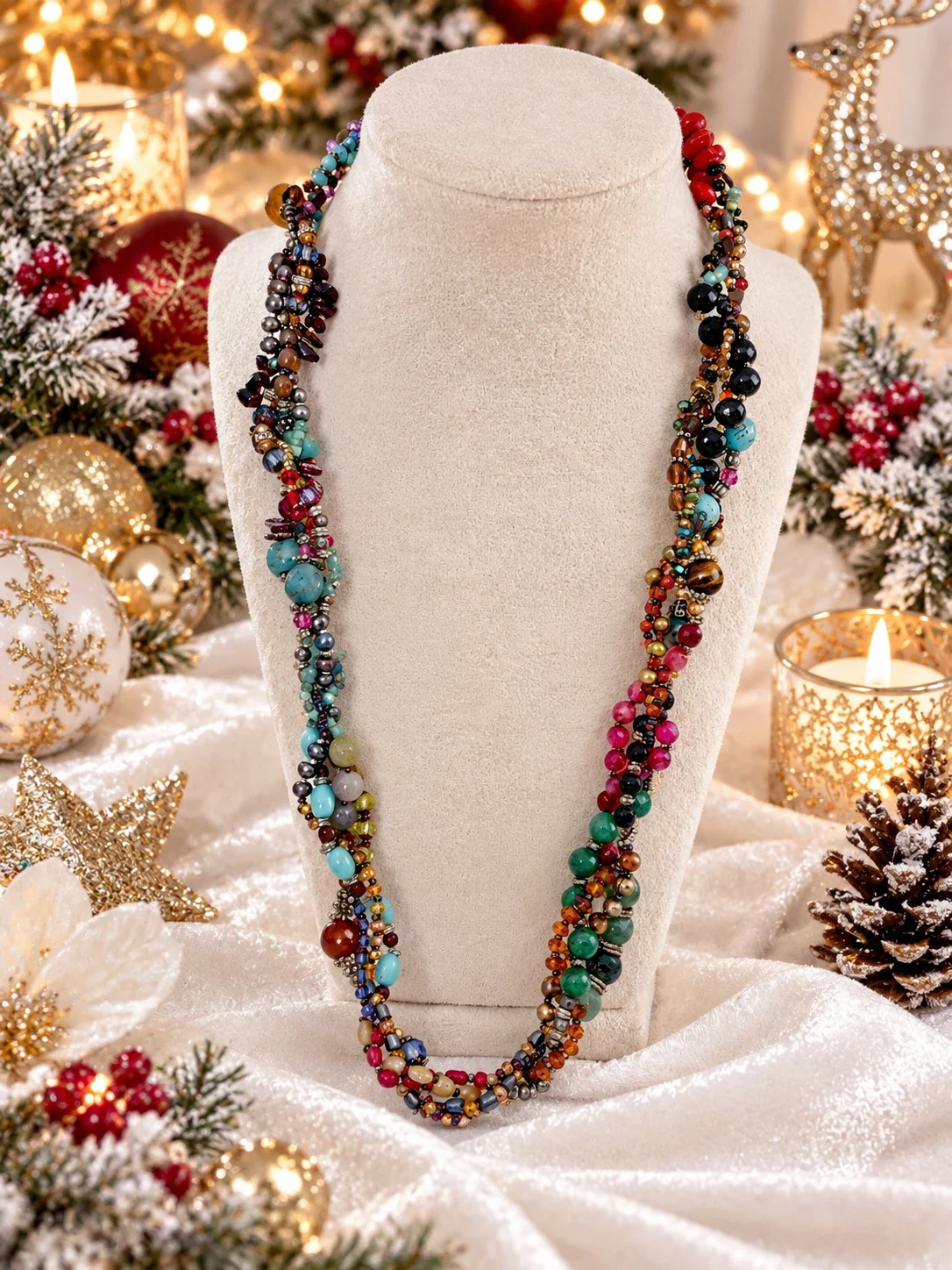
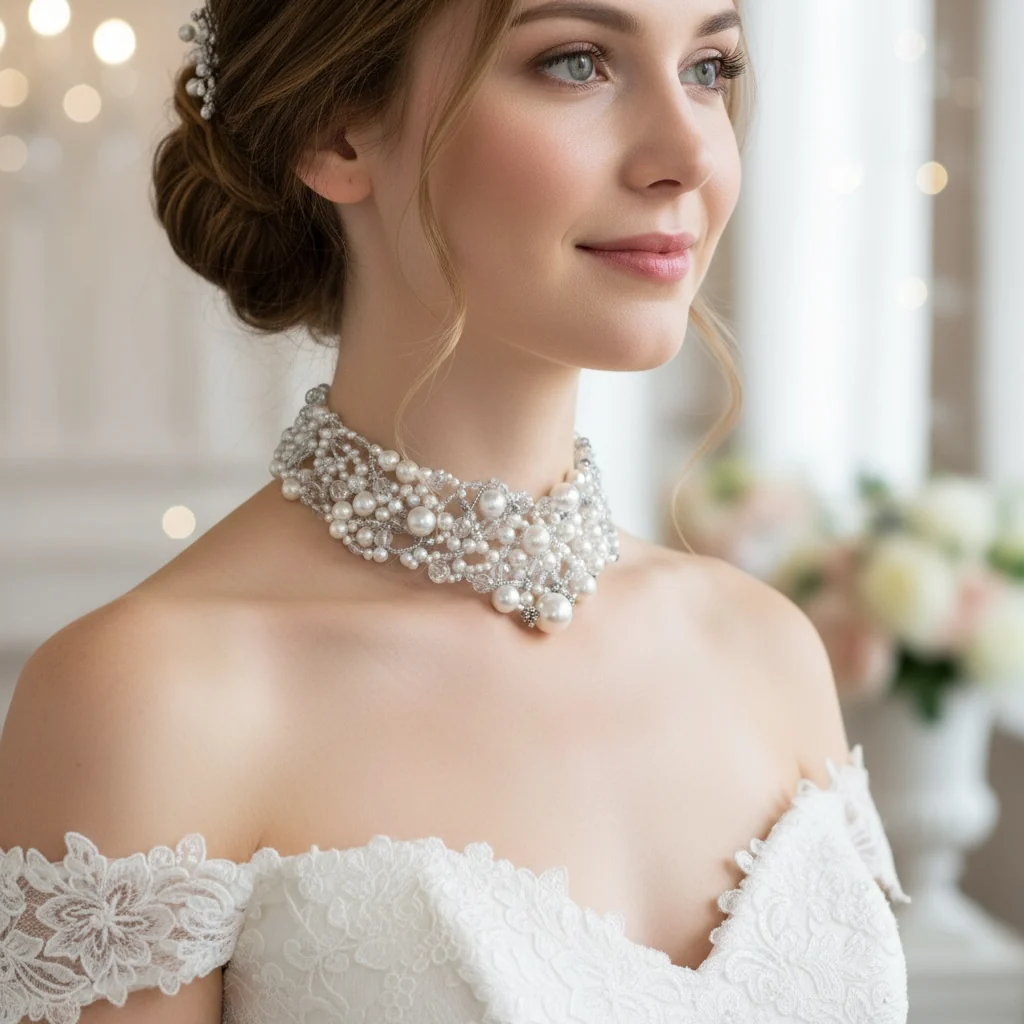
Ellie works mostly with natural stones, and every product page names what is in the piece. Where a piece uses glass pearls, the listing says so. The Pearl & Crystal Statement Choker is one example, made with genuine freshwater pearls and glass pearls together. The Multi-Colour Gemstone & Pearl Twist Necklace is strung with turquoise, coral, freshwater pearls, agate and garnet. If you want to know more about a particular stone, message us and we'll tell you what we know. You can also browse our stone guide.
Caring for the real thing
Natural stones last a long time with a little care. See our guide to cleaning and caring for gemstone jewelry.
Related reading
- How to clean and care for gemstone jewellery
- Gemstone meanings: a gentle guide to the stones we use
- Turquoise meaning, real vs stabilized, and how to care for it
Gemstone jewelry by Ellie
Every piece is one of a kind, strung and wired by hand in Canada.
Explore the jewelry →Sources used: Potomac Beads, "How to tell if gemstones are real or fake" and "Better Beader episode 058"; Worthy, "How do you know if a gemstone is real or fake"; Reve Diamonds, pearl identification guide.