
People have worn stones for as long as we've made anything by hand. Not because a stone can fix a problem, but because a colour can lift a mood, and a small, beautiful thing you keep close can mean a great deal. We share the traditional meanings below in exactly that spirit. Here's a gentle guide to the stones we use in our pieces, and what they've long been said to stand for.
How we talk about stones
These are traditional meanings that people have associated with stones for generations. We share them because we find them beautiful, not as medical or healing claims, and never as a substitute for professional care. Wear the stone that speaks to you, for the simple reason that you love it.
A little glossary of stones
Each of these turns up in our necklaces, bracelets and malas. Where a piece uses something other than a natural stone, like glass pearls, we always say so in the listing.
Turquoise
One of the oldest protective stones, traditionally carried by travellers. People have long associated it with calm and a sense of being looked after.
Jade
A stone of harmony and steadiness in many cultures, and long linked with good fortune. Quiet, grounding, and always a little lucky.
Amazonite
Its soft blue-green has traditionally been tied to calm and to the courage to speak honestly. A soothing stone to keep close.
Red Coral
Warm and vivid, coral has traditionally stood for vitality and, in many cultures, gentle protection. It brings a lovely richness of colour to a piece.
Onyx
A deep, grounding stone traditionally associated with steadiness and quiet strength. Lovely for when you want something calm and anchoring.
Citrine
Sunny and golden, citrine has long been called a stone of optimism and warmth, and old traders nicknamed it the merchant's stone.
Clear Quartz
The simplest and most versatile of stones. People have traditionally used it as a stone of clarity, and to focus an intention.
Pink Opal
Soft and tender in colour, pink opal has traditionally been linked with gentleness and matters of the heart. A quiet, comforting stone.
Cream Calcite
Creamy and calm, calcite is traditionally associated with fresh starts and a clear, unhurried mind.
Lava Stone
Formed from cooled basalt, lava is traditionally seen as grounding and steadying. Because it's porous, a single drop of essential oil can be added to a bead.
Rudraksha
Not a stone but a seed, traditionally worn in malas for calm and focus during meditation and prayer.
The stone you keep coming back to is usually the right one.
How to choose a stone
There's no wrong way to do it. Some people choose by meaning, drawn to a quality they'd like to keep close. Others choose purely by colour, by the stone their eye lands on again and again. Both are good instincts. A piece you actually reach for and wear is worth far more than the "correct" stone sitting in a drawer.
Looking after your piece
Gemstone jewellery likes a little care. Put it on last, after any perfume or lotion, and keep it out of the shower and pool. Store pieces separately so stones and strands don't scratch or tangle, and wipe them gently with a soft cloth now and then. Do that and a handmade piece will stay lovely for years.
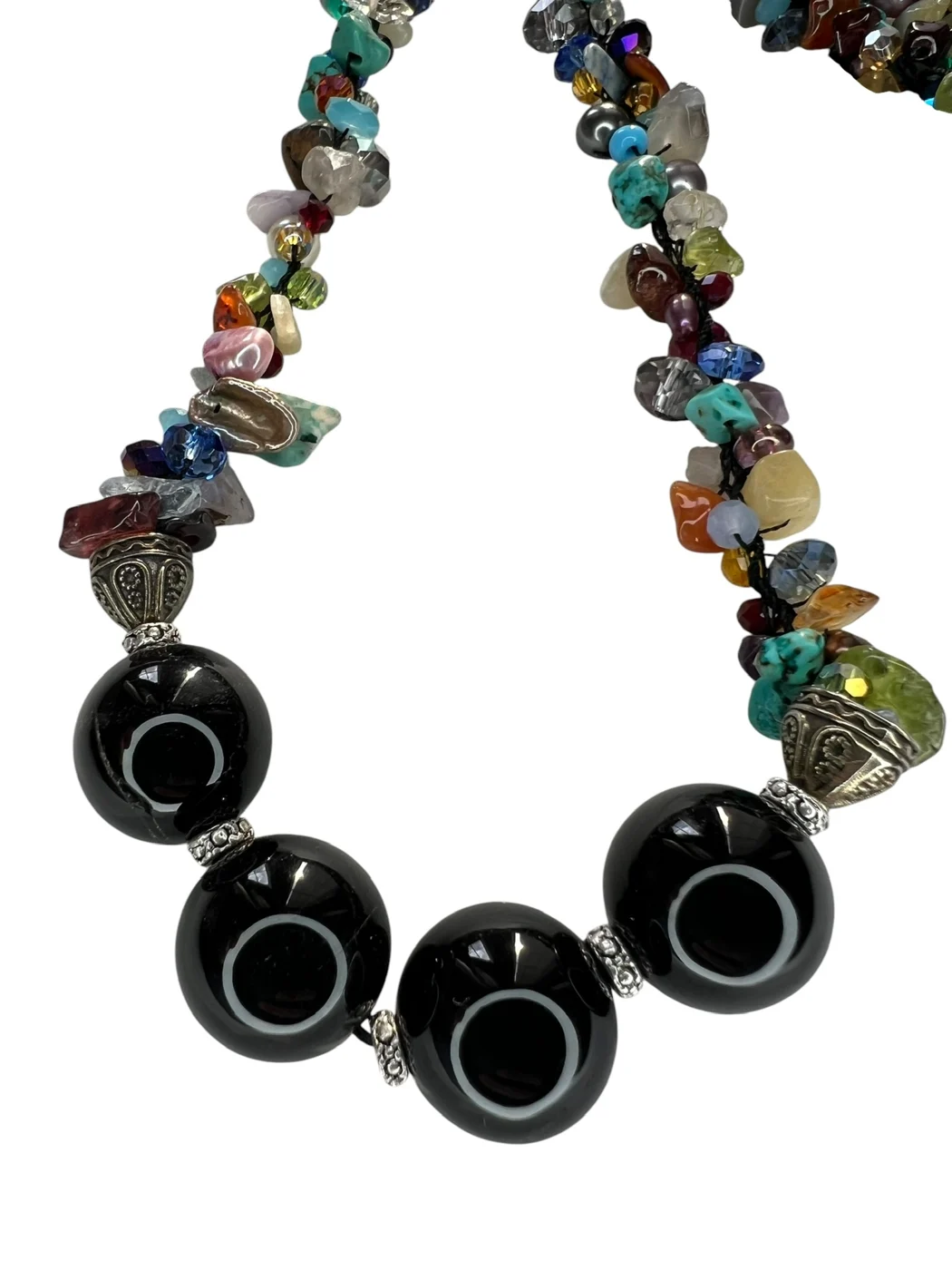
Healing gemstone jewellery
Each piece is hand-assembled by Ellie in genuine natural stones, one of a kind. Find the stone that speaks to you.
Explore the jewellery →Whatever you choose, wear it because it's beautiful and because it's yours. That, more than any tradition, is the real meaning of a piece made by hand.